Showing posts with label adventure. Show all posts

Sunday, August 12, 2012

Persy -- The Prophecy of The Stones by Flavia Bujor

On their fourteenth birthdays, three girls are told that they aren't who they think they are. Jade is not the daughter of the Duke of Divulyon. Amber is not the daughter of the poor peasant woman she's loved all her life. Opal is finally given a reason to exist.

The girls are each given a stone, and then sent away. They are warned to trust no one. On their travels, they discover the land of Fairytale, where they can finally learn their true purpose and hear The Prophecy. Soon it's not only a matter of survival, but a great battle between good and evil. But exactly whose side are the Stones on?

Meanwhile, in a hospital in Paris, a young teenage girl named Joa is on her deathbed, all alone...

My favorite books from my childhood are rarely as good as I remember them to be, especially if years and years have passed since the first time I read it. The Prophecy of the Stones by Flavia Bujor (translated from the French by Linda Coverdale), is different only in the fact that I've never stopped rereading it, and so I gradually grew aware of the fact that it's actually pretty bad instead of suddenly realizing it. Nevertheless, I will never cease to adore this book.

I'm not sure if it's Bujor's writing (she was only 13 when she wrote it) or the translation, but the writing is painfully simplistic and repetitive. The world of Fairytale and the surrounding countries is very black and white with its representations of good and evil, and most of the characters have only two layers, some only one. Amber and Aidan are the the most obvious.

Amber is a very sensitive, emotion-driven girl who cries a lot whenever she's sad or happy, and is the most set on saving the world from evil and uniting everyone in friendship and goodness. Aidan is just... there. Jade has two layers and the most character growth, going from the spoiled princess to the warrior princess over the course of the book and turning into a very cool character. And then Opal, who has always been my favorite, is the cool and aloof one who never shows emotion, but learns how to love and feel etc. The Nameless One is the humble hovalyn, the traveling warrior who has no memory. Some things change about him over the story, but he essentially stays the same character.

The plot is hardly aimless, but not much connects one thing to the next. The girls do things either because they're told by a helpful passerby who happens to know what they should do next or because they "get a strange feeling and know that they should do such-and-such." This is just an excuse to get the plot moving along without actually giving it much thought.

So basically, it's really not very good if you're looking at the minor things like writing, and plot, and characters. But there is something irresistable about The Prophecy of The Stones. Every time I read it, the first few chapters are painful and hard to get through, but then I get to a point where I don't want to put it down. I just want to read one more chapter. And then it's over. Maybe it's just nostalgia, but there's no denying that this book has a certain magic.

So while a 14+ might recoil in revulsion from this brilliantly orange novel, a younger girl would certainly eat it up. I fell in love with it back when I was a little girl (all those years ago), and I've never quite gotten over it. This was the book I would read over and over again, back to front, day after day. This was the book my friends and I would read aloud to each other even though we could quote most of it. This was the book we decided to convert into a play and perform, even though there were barely enough of us just to be the main three girls.

This is a story of magic written by a 13-year-old girl full of dreams.

--Persy

You might like this if you: like fairytale-esque stories; are a 10-year-old girl; like surreal stories; like books with personifications of Death; like light, young fantasy; or if you just want to feel like a kid again curled up with a favorite book.

Sunday, March 11, 2012

Persy -- The Fault In Our Stars by John Green

I think this may actually be the very first book I've read that was published in 2012. Unless you count Fracture, which I actually read in 2011 before it'd been released yet (sorry, I succumbed to the urge to gloat about being an early reviewer). The Fault In Our Stars is certainly an interesting way to start off the year (even though it's...March).

Hazel Grace Lancaster has cancer, but is, miraculously, still alive. She's lived almost five years longer than they expected, but she knows she doesn't have a lot of time left. So she's decided to "Not Be A Grenade" by keeping away from other people so she doesn't hurt them when she kicks the bucket.

But then she meets a new kid at her support group, Augustus Waters, and she begins to live again. They exchange books and long talks and finally end up going overseas together on one last adventure before the end.

It really is amazing.

First of all, John Green can write. I mean, holy crap, man. And his characters! Not just Hazel and Gus, but all the characters in this book are amazing. Mr. Green is so spectacular that he made me like a contemperary cancer book, and I usually like neither contemporary nor cancerous novels.

But the thing about it is that I looooved it while reading it, but once I'd put it down, I didn't really want to pick it up again. Maybe it's because it's pretty depressing, or maybe it's just that genre (because it's kind of the same way with other books in that genre). But this doesn't mean I don't reccommend it. I would even give this book to a past version of myself, because I definitely think it's worth reading, I just don't think I'll ever read it again.

The are some very interesting things in this book. I don't want to get into details because of spoilers, but the characters discuss philosophy and stuff without making it sound all stuffy and boring.

Also it was pretty dang funny. I love characters who can be kind of miserable, but still hilarious and not miserable in an incredibly miserable way. If you know what I mean.

So maybe this isn't making much sense, and I apologize. I just have a lot of very complex and mixed thoughts about The Fault In Our Stars. Basically, I think everyone should at least give it a shot, because it will definitely get you thinking.

--Persy

You might like this if you: like contemporary fiction; don't normally like cancer books but are looking for something you aren't normally into; love good characters; happen to be a Rene Magritte fan; or if you're just an awesome Nerdfighter (in which case, you've probably already read it).

Sunday, November 27, 2011

Persy -- Dragons of the Valley by Donita K. Paul

The three statues stabilizing the very thread of the world have been saved. They're in the right spot, and harmony has been restored. But is the adventure over for Tipper Schope, Grattapot-morphit Bealomon-dore, and the rest of the gang? Not hardly.

War is brewing between Chiril and a neighboring country, and they must keep the statues safe. They are sent away into hiding in one of the little-known kimen villages, with Tipper, Bealomondore, Fenworth, and Librettowit as their guardians. But they can't just sit idly by while Verrin Schope, Lady Peg, and Paladin save the day! Soon everyone is actively involved in an epic quest to save Chiril!

Let me just say, this book is so much better than the first one. It's easier to understand, had more enjoyable characters, and was set at a quicker pace. It focused more on my favorite characters, Bealomondore and Lady Peg, and also introduced a new one to add to my collection of favorites: the perky little kimen Hollee.

That said, it's still far from one of the best books out there. It might be faster paced than the first book, but it's still pretty slow.

And then there's the matter of Tipper. While she was an acceptable main character in the first book, in this one she's just plain annoying. I mean, she leads Bealomondore on for almost the entire book! Meanie pants.

Donita K. Paul also needs to develop her fight scenes a little. Dragons of the Valley does have more fighting than The Vanishing Sculptor, (it is about a war), but the battles last for only a brief paragraph always ending with "At last so and so won the battle." In this book, Bealomondore gets his own sword and soon becomes a master swordsman, and it's a shame we don't get to hear more about his amazing talent than "he whipped out his magic sword..."

But once you get all that out of the way, there are some parts I simply adored. Lady Peg really gets to shine in this one, engaging in a full conversation of twists and turns with an evil spy that leaves him thinking there's a complex system of code words and meanings.

Miss Paul also came up with a surprisingly good villain (though he could've been better, in my opinion). The Grawl, half man half beast with super human intelligence and hunting capabilities. So dangerous he could bring down Chiril, and all the dragons, singlehanded. Well, sort of.

And then there's Wulder. If you remember from the review in October, I didn't really like the God figure in the first book. But this time, he seems appropriately God-like and awe-inspiring. Bealomondore uses one of the best lines ever that is so true when he says, "As an artist, I have no doubt that someone created all you see. There is no picture without an artist."

--Persy

You might like this if you: read the first book and wished it'd been better; like Christian fantasy or adventure/fantasy; quirky fantasy like The Ratastrophe Catastrophe by David Lee Stone; or if you saved the world from unraveling but are worried about your annoying neighbor messing it all up again.

Thursday, November 10, 2011

Wednesday Scrolls - Literary Heroines Who Don't Suck, Classic & Historical Arena

And we're back with the next installment of Literary Heroines Who Don't Suck! We are now in the Arena stage, and have already seen Fantasy and Urban Fantasy heroines battle it out. Now the Classic & Historical heroines are here to compete. Refresh your memory with the contestants here.

And our first pair is... Mara (Mara, Daughter of the Nile, Eloise Jarvis McGraw) vs. Cat Royal (Cat Royal series, Julia Golding)!

Category One. Personality.

Mara's firey spirit is vibrant and stubborn, allowing her to survive in all kinds of situations and come out near the top. She's incredibly intelligent and good at persuasion.

Cat also has a strong survival instinct. She's quick with her feet and her mind, and sometimes her tongue.

Winner: Mara. It's a very long argument, strong insults are exchanged and they almost come to blows, but Mara wins in the end.

Category Two. Fight!

Mara's learned to use words instead of fists, but that hardly means she doesn't slap people around from time to time.

In a fistfight, Cat's pretty useless. She relies on her resourcefulness and quick feet to survive.
Winner: Mara. Again, it's a very long, drawn-out fight, Cat being too quick for Mara to catch. But Mara finally uses her wits to outsmart Cat.

Category Three. "Kiss Me, You Fool!"

Mara, the double-agent slave, and Sheftu the secret agent duke person!

Cat and...well, no one, really. She's got potential romance, but she's too young to even care. Good for her!

Winner: Mara, by default. And because Sheftu is awesome.

Category Four. Friends.

Mara, being a slave and a double agent, doesn't have any real friends, just some friendly acquaintances.

Cat's got a varied collection, including a violin-playing slave, two wealthy children, and the head of a street gang.
Winner: Cat, mostly be default.

Category Five. Historic Atmosphere.

Mara, the lucky gal, lives in Ancient Egypt, so her story is entirely plausible and feels fine.

Cat is from Victorian London, which leaves less to be imagined, but still feels perfectly acceptable unless you're a history fanatic.

Winner: Draw. I'm not good at history.

End Score! Mara: 3 Cat: 1 Draws: 1 Congratulations, Mara! You move on to the next round! Don't worry Cat, you probably didn't care to begin with.

And our second fighting pair is...Marguerite St. Just (The Scarlet Pimpernel, Baroness Orczy) vs. Emily Trefusis (Murder At Hazelmoor, Agatha Christie)!

Category One. Personality.

Marguerite is a kind, marginally happy young woman with a strong spirit and lots of nerve.

Emily is very sharp and observant, and knows how to use her pretty smile.

Winner: Emily. She's more comfortable with diving into an argument and so has an advantage.

Category Two. Fight!

Marguerite may slap an attacker if her life depended on it, but fighting does not come naturally to her.

Emily is very similar, and wouldn't really know what to do in a fight.

Winner: Draw. Neither contestant will strike first.

Category Three. "Kiss Me, You Fool!"

Marguerite and Sir Percy, AKA The Scarlet Pimpernel! Yeees!
Emily and her fiancé. Even she admits he's a weakling, but loves him nonetheless.

Winner: Marguerite. Emily's devotion and love certainly are admirable, but Marguerite and Percy are way more interesting.

Category Four. Friends.

Marguerite ends up with no true friends, and no one to trust besides the mysterious Scarlet Pimpernel...

Emily teams up with Charles, a reporter who falls in love with her.

Winner: Marguerite. The Scarlet Pimpernel definitely beats a love-sick reporter.

Category Five. Historic Atmosphere.

Marguerite lives in the middle of the French Revolution, portraying the chaos and tension very well.

Emily is much more modern, in the early 1900s.

Winner: Marguerite. Even the French Revolution is more interesting than the 1930s

End Score! Marguerite: 3 Emily: 1 Draws: 1 Congratulations, Marguerite! You're moving on to the next round! Don't worry, Emily, you just go back to your pathetic fiancé.

And our last pair is...Mary "Jacky" Faber (Bloody Jack series, L.A. Meyer) vs. Rosalind Hawkins (The Fire Rose, Mercedes Lackey)!

Category One. Personality.

Jacky's fun-loving, witty, strong personality developed out of neccessity, but that's perfectly fine because she's hilarious and a proper trickster.

Rose is a perfect example of what a historic heroine should be: not obsessed with women's rights, not gushing over fashion, and smart and capable. She doesn't even think about her station as a woman, and that's absolutely refreshing.

Winner: Draw. Jacky might win any argument they have, but Rose has a certain dignity in maintaining her somewhat confused silence.

Category Two. Fight!

Jacky can fight. She's good with guns, swords, cannons, and her own fists. Watch out, world.

Rose, on the other hand, being a proper lady, can't fight at all.

Winner: Jacky, obviously.

Category Three. "Kiss Me, You Fool!"

Jacky's undying devotion to her true love Jaimy is sweet, but Jaimy's hardly ever in the books.

Rose and James, Beauty and the Beast.

Winner: Rose. Jacky gets points for refusing the hordes of men she leaves in her wake, but Rose and James are so wonderful.

Category Four. Friends.

You can't count the number of people Jacky befriends. Half the world owes her favors and the other half wants her dead.

Rose, on the other hand, is rather friendless.

Winner: Jacky. I expect her friends would still win even if Rose had anyone to bring to the table.

Category Five. Historic Atmosphere.

I'm pretty sure Jacky's world isn't exactly what it was like in the 19th century, but it's so much fun it feels perfectly plausible.

We've already discussed how Rose is a proper historic heroine, which makes her whole world feel so much more realistic.

Winner: Rose. Her world is perfectly constructed and fits the time period, while Jacky's just seems to.

Tie Breaker Category. Style.


Winner: Jacky. Her style is more fun and more amusing, and usually more useful.
Style is always important when it comes to historical novels, and Jacky has got some amazing style. Her fashion style may not be so great (she looks good in a dress, but doesn't always manage to keep it undamaged), but she knows how to make an entrance -- and an exit.

Rose is softer, quieter, and less dramatic. She doesn't find it necessary to be seen, which I respect.

End Score! Jacky: 3 Rose: 2 Draws: 1 Congratulations, Jacky! You're on to the next round! Don't worry about it, Rose, you don't really care anyway.

So our Classic & Historical finalists are Mara, Marguerite St. Just, and Jacky Faber! Tune in next Wednesday for the Other Genres Arena!

--Persy

Sunday, October 30, 2011

Persy -- The Vanishing Sculptor by Donita K. Paul

Welcome to Chiril, a fantasy land of dragons, parrots, seven low races, and seven high races. It's surprisingly complicated. And then the wizard and the librarian show up and everyone's off on a quest to recover missing statues. Don't worry if you're having a hard time following, you're not the only one.

Tipper Schope has gotten used to responsibility ever since her father, the famous artist and sculptor Verrin Schope, disappeared about ten years ago. Her mother, Lady Peg (who is technically a princess, but was banished by her parents), has just about lost her mind, so maintaining the estate is left to Tipper. Luckily, she has her father's dear friend Sir Beccaroon, a grand parrot of the Indigo Forest, to help. But that doesn't make anything easy, and Tipper has to start selling her father's old pieces of artwork.

Imagine her dismay when her father miraculously returns (sort of) with Wizard Fenworth and his librarian Librettowit all the way from Amara, a distant country. When she confesses to selling Verrin Schope's statues, she discovers things are worse than she thought. Apparently, there was this block, a kind of cornerstone of the world, that fell through a portal into Verrin Schope's studio. Naturally, he carved it into three statues. But when the statues were separated, the world began to unwind, and now Verrin Schope, Fenworth, Librettowit, Sir Beccaroon, and Tipper, along with the help of a pretentious artist named Bealomondore, must recover the statues before the world, and Verrin Schope, disintegrate!

But before they do that, Fenworth and Verrin Schope decide they need a better means of travel than a rickety old carriage (for one thing, it's not fast enough, and for another, it's uncomfortable), so they go hunting for the major dragons. But people don't ride dragons in Chiril, most people never even see the big ones (the minor dragons are more like pets or servants). But befriending the dragons may be harder than they think, especially since they're in the care of a mysterious Dragonkeeper...

The biggest problem with this book is that Donita K. Paul doesn't find it necessary to explain her world at all. You're reading along and the book casually mentions the dragons and a parrot and emerlindians and tumanhofers and never tells you what's going on. Her writing style also isn't the clearest, which only adds to the confusion.

And the worst of it is, it's actually a very simple plot with rather simple, 2D characters. The writing is just so elaborate that you don't always notice. You're too busy figuring out what a tumanhofer is to care about said tumanhofer.

If you can figure it all out, then it's actually a pretty good fantasy quest novel. It's more centered on the questing and adventuring than the characters, so their flat personalities can be excused. Wizard Fenworth is easily the best character, with lizards and bugs and leaves always falling out of his beard and robes (he's a bog wizard, after all).

Another thing that rather bothered me is Wulder. This is Christian fantasy, and in this world, Wulder is the equivalent of God. Except in Chiril, no one knows about Wulder. But Fenworth and Librettowit come from Amara, where he's well known. So amidst the questing, there's lots of talk about Wulder and how Wulder will help them and it will all turn out according to Wulder's plan, whatever it may be. Which is all fine, but the way they presented Wulder made me dislike him. A Christian book that makes me dislike the God figure isn't a good thing. Donita K. Paul does get better at this, though.

If you're wondering why the picture has "Dragons of Chiril" as its title, its simply one of those stupid deals when a book is published under two names (why why why do they do that?). I believe it was first published as The Vanishing Sculptor, and that's what my copy's called, but was later rereleased as Dragons of Chiril, probably to match the other titles in the Valley of Dragons series. And I don't even know why it's called that, because it's not really about the dragons.

Speaking of the series (which is a prequel series to Miss Paul's DragonKeeper Chronicles), I'm currently reading the second book, Dragons of the Valley, and so far I'm enjoying it much more than the first book.

A few things you should know before starting The Vanishing Sculptor: there's an appendix in the back. There are seven high races and seven low races in the fantasy world, emerlindians and tumanhofers are both of the seven high races. Minor dragons, while not all over the place, are fairly common to the wealthy (though no one except the Schopes seem to have any). There are also grand parrots in the fantasy world (though we never see one besides Sir Beccaroon).

--Persy

You might like this if you like: Christian fantasy; adventure/quest fantasy; the Dragons In Our Midst series by Bryan Davis; fantasy akin to The Ratastrophe Catastrophe by David Lee Stone; or if you have suspicions that the world is unraveling but you don't know why.

Monday, October 17, 2011

Persy -- The Last Thing I Remember by Andrew Klavan

You ever wake up and find yourself strapped to a chair, covered in burns and cuts and bruises? You are, that is, not the chair. The chair's fine. Well, probably. Who knows what these dastardly villains have done to the poor thing.

Who are these dastardly villains, you suddenly ask yourself. You can't remember. You have no idea where you are. You frantically think to yourself, what's The Last Thing I Remember?

Well, The Last Thing I Remember is actually a book by Andrew Klavan, about a boy who finds himself in the exact same position. The last thing Charlie West can remember is a normal day--Yesterday? Sure, it was filled with some excitement (epic karate demonstration, finally getting Beth's phone number, arguing with Alex), but in the end, it was a normal day. Nothing to explain why he's just woken up from a night of torture.

Charlie barely escapes with his life, but now he must embark on a quest to figure out what's going on. But just as he seems to get close to safety...he finds he will never again be safe.

This book starts out strong. There's a smooth blend of flashbacks and scenes from the present, both of which keeps the reader (you!) interested. But soon the novelty of an amnesia-suffering MC wears off, and you start noticing some things.

First of all, Andrew Klavan's writing isn't exactly epic. His sentence structure is very repetitive (usually beginning with 'I'), and he tends to use short sentences for dramatic effect. He often does this. He starts the sentences with the same word. He thinks this will be cool. He is wrong.

Then, before you know it, you've reached the end of the novel, and you're left with this feeling of, "Whaaaaaa?" It's one of the most abrupt endings ever. The only warning you get is when you start noticing you're running out of pages. Klavan never quite finishes setting the story up, so the whole book feels more like a really, really long prologue.

So points to Klavan for a good idea and a good MC, but he needs to work on his actual writing style. There are three more books in the Homelanders series, and I'm at least going to read the second one in search of some kind of climax.

--Persy

You might like this if you like: The Extraordinary Adventures of Alfred Kropp by Richard Yancey, or if you like like YA thriller/suspense or action/adventure novels, or if you're worried about one day waking up with amnesia.

Wednesday, October 12, 2011

Wednesday Scrolls - Literary Heroines Who Don't Suck, Classic & Historical Fiction Edition

Time to continue the ongoing Literary Heroines Who Don't Suck Saga! We've already covered fantasy and urban fantasy, and today we'll be taking a look at both classic and historical fiction. I combined the two genres because there just weren't enough to warrant a list for each. Even combined, there's only 8, not even a full 10. I don't read a lot of historical fiction, and there aren't really a lot of heroines in classic novels. What's really amazing though, is that they're all almsot equal in their awesomeness. Here's a list of the 8 I've encounted in my travels:

#8. Wilhelmina "Mina" Harker from Dracula by Bram Stoker. Classic Horror. Listen, y'all (and I don't use that term lightly), Dracula is not boring, it is not tedious, and it is not filled with obscene pages of violence and dirt. It's a work of genius. and Mina Harker is actually very cool. She's certainly not the best character in the book, but that hardly makes her boring. She's comfortable in her situation as a woman, doesn't run off to kill the vampires behind Van Helsing's back, and yet is still brave. She is dignified. And the book itself? ^^ Work of genius.

#7. Kit Tyler from The Witch Of Blackbird Pond by Elizabeth George Speare. Classic Fiction. "Despite winning the Newberry Award..." Yeah, I did just quote myself. But let's face it, Newberry Award winners are usually dull and boring, but "Blackbird Pond" is an exception to the rule. Kit is pretty awesome, seen as a foreign witch by her new neighbors and relatives. But she ends up making a school (by accident) for the young children, teaching them to read and write. Go Kit! And the book itself? Excellent.

#6. Rosalind Hawkins from The Fire Rose by Mercedes Lackey. Historical Fiction/Fantasy. As I've said before, best Beauty and the Beast retelling. Ever. Rosalind, like Mina, is perfectly content being a woman and wearing corsets and skirts, and doesn't even think about it. Instead, she just curls up in her chair, forgetting all about her skirts, to read her books in comfort. She's and educated woman, irritated that men don't always accept her knowledge, but she doesn't jump up on a soapbox and start shouting at everyone. Plus, she's just kind of cute. And the book itself? ^^Best B&B retelling. Ever.

#5. Emily Trefusis from Murder At Hazelmoor (AKA The Sittaford Mystery) by Agatha Christie. Classic Mystery. Christie doesn't always do it for me, but Emily is very cool. If you want something done, do it yourself. That's what she decides when her fiancé (a silly little man, but for some reason she can't figure out, she loves him anyway) is charged with murder. So she heads down to solve the mystery herself, weedling her way into the heart of the little village. She's a brilliantly created heroine. And the book itself? Ending a bit disappointing, but overall quite good.


#4. Cat Royal from the Cat Royal series by Julia Golding. Historical Fiction. Cat's actually a very average young adult historical heroine: spunky, adventurous, and witty. She's good at getting into tight situations, and she's good at getting out of them. Perhaps it's Golding's writing that distinguishes Cat from all the others. And the book itself (The Diamond of Drury Lane)? So good.
#3. Marguerite St. Just from The Scarlet Pimpernel by Baroness Orczy. Classic Adventure/Superhero. *squees* Best book EVER. While Marguerite isn't the best part of it, she plays her part(s) superbly. You want a double agent? Check her out. And the book itself? OMGZ SO AWESOME.

#2. Mary "Jacky" Faber from the Bloody Jack/Jacky Faber series by L.A. Meyer. Historical Adventure. Girl dresses as boy to get into some sort of all-boy situation. Cliché. But when it's actually done well, it's amazing. Jacky doesn't start dressing as a boy because she particularly wants to, it just kind of happens and she's got nowhere else to go but the sea, and they don't take girls anyway. Jacky is full of adventure and absolute hilarity. And the book itself (Bloody Jack)? Go read ALL THE BOOKS IN THE SERIES!

#1. Mara from Mara, Daughter Of The Nile by Eloise Jarvis McGraw. Classic/Historical Espionage. Okay, remember how I said Marguerite St. Just is the best example of a double agent? Mara would actually give her a serious run for her money. I would love to see these two in battle. Mara is roped into double agent-dom, but she does it so well and she's so amazing. And the book itself? Dude, READ IT ALREADY.

And there you have it. This weekend I'll be doing a review, and the following Wednesday we'll have the last installment of the Literary Heroines Who Don't Suck Saga! Unless we have an ultimate showdown, of course...

--Persy

Wednesday, September 21, 2011

Wednesday Scrolls - Literary Heroines Who Don't Suck, Fantasy Edition

You may remember the hate list I made a few weeks back, listing 12 chars in literature that I can't stand. Another type of char that is usually despicable is the heroine. Heroines are usually annoying little whiners or tough I-can-do-anything-a-boy-can-do jerks, but sometimes there are a few who don't suck. In fact, a few are pretty cool. Originally, I was just going to compose a list of heroines that don't suck, but then I discovered that there were actually quite a few awesome heroines, so I had to divide them up into genres, and I'll be posting each edition for the next few weeks on Wednsdays. But, at the end of it all, I may just start really narrowing it down in an epic showdown, and we'll see which heroines are at the very top of the not-sucking pyramid.

This week's edition: Fantasy. I'll be honest, this was hard. I read a lot of fantasy, and there turned out to be quiite a few awesome heroines, but I managed to narrow it down to 10. This list is by no means absolute, and it's hardly like #1 is significantly more awesome than #6. In fact, this list would probably be different if I'd been in a different mood.

#10. Sabriel from Sabriel by Garth Nix. Sabriel has always been one of my favorite books, and Sabriel herself is part of why. She starts out strong and knowing what she's doing, but she's still a bit new at it all so you get to learn along with her. And the book itself? Awesome.

#9. Stephanie Edgley from the Skulduggery Pleasant series by Derek Landy. Hey, if Stephanie wasn't smart, she'd never ended up as Skulduggery Pleasant's trainee, let's just put it that way. And the book itself (Skulduggery Pleasant)? Awesome.

#8. Anidori-Kiladra Talianna "Isi" Isilee from the Bayern series by Shannon Hale. Isi is charming. She's in a pitiful situation, but makes the best of it while saving the world. She also gets points for talking to geese. And the book itself (Goose Girl)? Awesome.

#7. Captain Holly Short from Artemis Fowl by Eoin Colfer. Captain Holly Short, a fairy policewoman, so to speak. She's tough, but isn't adamant about it and doesn't go around proclaiming her awe-inspiring ability to knock ten men out with a single blow. And the book itself (Artemis Fowl)? Awesome.

#6. Fire from Fire by Kristin Cashore. Fire is a truly unique char. She's not superwoman, in fact, she's technically a monster, "cursed" with indescribable beauty that gives her control (if she takes it) of just about any man (and maybe a few women too). She learns to defend herself, but is never the best warrior ever, and that doesn't stop her from using her own talents to save the world, so-to-speak. And the book itself? Awesome.

#5. Sophie Hatter from Howl's Moving Castle by Diana Wynne Jones. Like Isi, Sophie is introduced to a pitiful situation early on, and, like Isi, she makes the best of it and turns out to be completely awesome. She's the best young-woman-cursed-as-grumpy-old-woman you'll ever find. And the book itself? Awesome.

#4. Benevolence "Ben" from Princess Ben by Catherine Gilbert Murdock. Ben leads a very impressive life. She starts out as a fat little thing, a bit piggy and selfish, but when unfortunate circumstances lead her to a life of despair, she starts to teach herself magic and eventually ends up traveling all over a snowy mountain (which certainly gets rid of a few pounds). Ben's character growth is amazing, and she's an enjoyable character all the way through. And the book itself? Awesome.

#3. Hermione Granger from the Harry Potter series by J.K. Rowling. Well, obviously she'll be on this list. HP is one of the biggest and best fantasy series ever, and Hermione is definitely one of the (many) reasons why. She's got flaws, she's got character growth, she's got smarts, she's got a feminine side, and she's got a pretty good right hook. And the book itself (Harry Potter And The Sorcerer's Stone)? Awesome.

#2. Flora Segunda from Flora Segunda by Ysabeau S. Wilce. I don't know why this book is so obscure, because Flora is made of awesome. Bit lazy and likes to eat a bit too much, and she may not be the prettiest thing in the book, but boy does she have a nack for adventure. And the book? Well, awesome.

#1. Courtney Crumrin from the Courtney Crumrin series by Ted Naifeh. Is it weird that the #1 on this list is from a comic book? No, it is not, because Courtney Crumrin is amazing. She's got the whole tainted old soul thing down while still a young teen, and not in a sappy urban romance way. And the book itself (Courtney Crumrin And The Night Things)? Awesome, though in my opinion, the fourth book (Courtney Crumrin's Monstrous Holiday) is actually the best.

And there you have it. Some honorable mentions: Creel (Dragon Slippers, Jessica Day George), Princess Cimorene (Enchanted Forest Chronicles, Patricia C. Wrede), Rage Winnoway (Night Gate, Isobelle Carmody), Sydelle Mirabil (Brightly Woven, Alexandra Bracken), Cecelia Rushton (Sorcery & Cecelia, Patricia C. Wrede and Caroline Stevermer), Katherine "Kate" Talgarth (Sorcery & Cecelia, Patricia C. Wrede and Caroline Stevermer), Opal Cowan (Opal Cowan series, Maria V. Snyder), Suzy Turquoise Blue (Keys To The Kingdom series by Garth Nix), Mira (Mira, Mirror, Mette Ivie Harrison), Alys (Dragon's Bait by Vivian Vande Velde), Veralidaine "Daine" Sarrasri (The Immortals Quartet by Tamora Pierce), and Jessica Sternhagen (Erratum by Walter Sorrells).

This weekend: a review by Arty! Next Wednesday: Urban Fantasy edition of Literary Heroines Who Don't Suck!

--Persy

Monday, August 1, 2011

Persy -- The Familiars by Adam Jay Epstein and Andrew Jacobson


Meet Aldwyn, an alley cat with a chipped ear and plenty of street smarts. He gets his food however he can (thievery, usually), and enjoys ever minute of his carefree life. That is, until he stumbles into a trap and finds that the worst bounty hunter of them all is after him. While trying to escape, Aldwyn finds himself in a Familiar shop, where young wizards come to purchase their animal helpers. Mistaken for a telekinetic cat, Aldwyn is taken away to be young Jack's Familiar. He meets two other familiars: Skylar, the intelligent (and a bit bossy) blue jay, and Gilbert, a friendly (but slightly dim) tree frog. He finds that life as a wizard Familiar is much easier than life as an alley cat. There's only the matter of masquerading as a telekinetic cat...

But soon that's the least of Aldwyn's troubles. The Familiars' wizards are captured and it's up to the three animal friends to rescue them! But they only have three days to figure out where their wizards are and how to save them.

I honestly wasn't expecting much from this book, but I was pleasantly surprised out how much fun it was. The writing is decent and the characters are interesting and fun. The story continued to twist and turn (though perhaps not being totally surprising, but it's not like it's an adult thriller or anything) and the trio journeyed all over the land of Vastia, a surprisingly developed world.

Let's put it this way: it's an awful lot like a cross between the Warriors series by Erin Hunter (before it got bad) and Harry Potter by J.K. Rowling (the first couple of books when they were young and adorable). So if you enjoyed either of those series, check out this one!

Unfortunately, this book's a little obscure, so it may be hard to find it. Hopefully it'll gain some fame by the time the second book comes out so I'll be able to get my hands on it.

While not a completely original tale of magic and animals (is it even possible to find one of those these days?), The Familiars is certainly a great book and definitely worth the small amount of time it will take you.

--Persy

Sunday, June 19, 2011

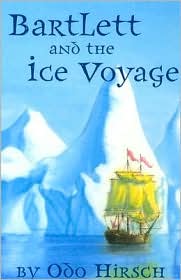
Arty -- Bartlett And The Ice Voyage

The Queen has tasted every fruit that her seven countries have to offer... except for one. The melidrop is the only one that has ever eluded her grasp. The reason for this is because, after one day from being plucked from its root, the melidrop rots - and the queen lives months away from the land where the melidrop grows.

Being a queenly sort of queen, she becomes obsessed with the elusive fruit, going so far as to ban the mention of melidrops, because if she can't enjoy them, nobody can. It's then that they bring in Bartlett - explorer extraordinaire, if the previous expert explorer, Sutton Pufrock, can be believed.

Bartlett isn't actually that impressive. He's a stringy, shabby little man with freckles and wild hair. But he has the necessary attributes for a model explorer - Inventiveness, Perseverance, and Desperation. So off the Queen sends him with his partner, Jacques le Grand, to find a way to transport the tantalizing melidrop to the impatient Queen.

Obviously, this is a book for a slightly younger audience than my usual review. But that's okay, because this was actually an engaging, interesting read. Was it a little heavy-handed, a little too unlikely, a little obvious sometimes? Sure. But was it trite or easy or uninteresting? No way.

The forthright plot makes it easy to get right down to business: finding out a way to transport the melidrop. There are really no subplots at all, unless you count the sections where the Queen and her best counselor are talking about patience. (Even this, by the way, doesn't turn into too much of a sermon, because Hirsch really has a way with subtle but effectual humor, which he uses during these parts.) Though the lack of backstory sometimes annoyed me - Bartlett is a really likable character, and I wanted to know more about him - it's not too much of a problem once you grasp what kind of a book this is. It's not a character growth novel (unless you count the Queen) - it's an adventure novel, pure and simple.

I just mentioned that Bartlett is a great character - he's funny but not a clown, not talkative but not quiet, intelligent and honest. (Actually, he'd be something of a Gary Stu in another book, but since this is a kid's adventure, it's all just fine.) And Jacques le Grand is a perfect foil for him - silent, strong and brawny, but just as adventurous and inventive as Bartlett. The Queen is well-done, and her favorite counsellor (I forget his name) is just awesome. I didn't, however, like Sir Hugh, the quintessential Wily Counsellor Groveling and Weaseling for Power, even though he was half necessary for the Queen's subplot. Gozo - a young boy that Bartlett and Jacques pick up during their search for melidrop transportation - also failed to inspire me. Neither of them had much originality or personality going for them.

Still, two characters can't ruin a thoroughly enjoyable book, and Bartlett And The Ice Voyage was thoroughly enjoyable. Hirsch managed to make a simple adventure tale into one of both exploration and Invention, patience and Desperation, and above all, Perseverance. I'd recommend it to anyone looking for a fun afternoon read, who isn't afraid of reading a 'kid's book.' Fans of Verne's Around The World In 80 Days might be more interested - it had the same kind of feel to me, especially toward the end.

A sidenote: Persy is out of the country until July 4th, so you'll have to put up with my reviews for another two weeks. Lucky you!

Monday, September 20, 2010

Persy -- Night Gate by Isobelle Carmody


Rage Winnoway's mother is in a terrible car accident, and she falls into a coma. The doctors say there's no reason why she shouldn't wake up, but she remains asleep. Everyone expects her to die, but Rage will not accept it.

And if her mother does die, Rage will have to give away all her dogs. Mr. Walker, a small chihuaha who tends to be in charge; Bear, an older, cold dog who has had a harsh life; Billy Thunder, Bear's cheerful puppy who just wants some love; and Elle, an unattractive but loyal and brave dog with limitless energy.

No one will let Rage visit her mother, so she runs away with her dogs to try and get into the hospital. Maybe if her mother can just hear Rage's voice, she'll wake up!

But Rage and her friends don't get to the hospital. Instead, Rage finds a strange gateway in the forest and a mysterious creature called the Firecat appears to her and tells her to go through. On the other side, the Firecat says, is a wizard with extraordinary powers, and the only hope of saving her mother. Believing it all to be an elaborate trick, Rage goes through the gateway with her dogs. But when she wakes up on the other side, She finds that there's definitely something strange going on.

Mr. Walker is transformed into a tiny, furry little man. Bear turns into a real bear, Billy Thunder is a teenage boy, and Elle a brave warrior woman. And then Goaty, the neighbor's goat, seems to have wandered after them and gone through the gate as well, and is now a sort of faun!

With only the Firecat's cryptic directions and explanations, Rage and co. set off through the strange land of Valley in search of the wizard, who can hopefully both send them home and save Rage's mother.

Let's start off saying that Isobelle Carmody is Australian. Unfortunately, she's not quite as awesome as, oh... Garth Nix or Catherine Jinks, to name a few other Australian authors. Apparently, Carmody is more well-known for her series Obernewtyn, which I've actually never heard of before now. Though I hadn't heard of Isobelle Carmody herself until stumbling across Night Gate in the library the other day.

I honestly wasn't expecting much from this book. The cover wasn't all that interesting (I know, I know, don't judge a book by its cover...), and the plot didn't sound very fabulous either. But I was pleasantly surprised to find this story enjoyable and oddly thoughtful at times.

The whole thing has this strange dream-like atmosphere that was kind of disconcerting at times, and which would've been awesome if the ending had different. But the ending wasn't different, so it just made the book seem a little off. The characters weren't very impressive either. Rage seemed a bit forgetful and just plain uninteresting, while most everyone else did nothing but argue. Goaty is definitely my favorite, with his adorable, pessimistic self.

Billy Thunder does have one of the most interesting and, let's just go ahead and say, coolest quotes ever. "'I don't think I'd like to be completely human ... I thought I would, but now I can see that human minds are growing all the time, until they are like enormous houses with thousands of rooms and twisty passages and dark hallways all full of cobwebs and shadows and forgotten things. No wonder there is so much confusion in human minds. Dog minds are like standing outside. There are no walls, the wind blows freshly, and the light falls everywhere.'"

Carmody's writing really is very pretty. She's built herself a pretty cool world, with a city that sounds an awful lot like Billy's description of the human mind. I don't know if she did that on purpose or not, but either way it's cool.

I'd give this book to kids maybe 10-14 who like simpler fantasy stories. It certainly wasn't a great book, but I do think it's worth reading.

There are (supposedly) two more books in the trilogy (which would make sense). The second book is Winter Door, and the third book is supposed to be Firecat's Dream. But it doesn't look like Firecat's Dream is actually published, and isn't even listed in the Gateway trilogy on some sites. Since Night Gate was published ten years ago, I really have no idea if Firecat's Dream will ever actually exist or not. Isobelle Carmody doesn't have her own website, so there's really no source to go to.

-Persy

Sunday, June 13, 2010

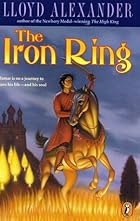
Arty -- The Iron Ring by Lloyd Alexander

In the middle of the night, young king Tamar is awoken by a parade of elephants and courtiers. The cause of the discourteous commotion is King Jaya, a monarch of a faraway kingdom, who is passing through and demands lodging. Jaya promptly challenges Tamar to a game of aksha (a dice game), with increasingly high stakes. Caught up in a rash of winnings, Tamar feverishly bets his life against Jaya's - and loses. Triumphant, Jaya claims his prize... and vanishes. No one but Tamar seems to remember the rude king's visit, and there is no proof for it - except for the iron ring around Tamar's finger, symbolizing, supposedly, Jaya's hold on Tamar's life.

As there is still a chance that Jaya was not a dream, and therefore is still owed a life-debt by Tamar, Tamar decides to journey to Jaya's kingdom. Taking his loyal mentor and brahmana Rajaswami with him, Tamar sets out to make good on his dharma, or honor.

As my first non-Prydain Lloyd novel, I had high-hopes for The Iron Ring. Admittedly, I shouldn't compare, but it is hard to be unbiased with the other books of an author who wrote such a classic series.

Basically, The Iron Ring is a not-so-epic epic. Using something of a formula in fantasy, the protagonist goes on a quest with his trusty mentor, meets both comedic and mysterious sidekicks, and his ladylove, along with, of course, a minor villain. All while the threat that the iron ring symbolizes hangs over Tamar's head.

The first part of the book was amusing at times, tiresome at others. Very little was unexpected. Mirri, especially, I found annoying, as a typical 'I am woman, hear me roar at you bothersome men' heroine. Tamar and the other characters were flat and unappealing.

About three-fourths of the way through the book, however, things picked up. Action was more interesting. Tamar was at rock bottom; this character was dead; is another dead as well? Or is there a plan? These chapters rekindled my dying interesting. But the flames didn't last long, and the end fizzled in what seemed a cop-out.

There was also a definite lack of the title character - the iron ring. In a story one would think was about Tamar's determination to get to the bottom of King Jaya's odd appearance and disappearance, he thinks very little about his bondage. During the first part of the book, little 'mini-adventures' distract him; the second part is filled with fighting the minor villain. One starts to wonder what the goal of the story is, after a while.

On a more positive note, The Iron Ring is based on Indian and Hindu mythology and psychology, with plenty of talking animals (more so than humans) and dharma-defending. At times this was confusing - are they not surprised that animals talk? I thought this character just voiced doubt about the forest's talking beasts. But the information on a mythology rarely studied was interesting, and I can see Lloyd's attraction to it.

In short, The Iron Ring is a typical mini-epic. Short on originality, though full of potential inspiration. Readers fond of Lord of the Rings-esque, questing novels will be interested; to others, I would hesitate to recommend it.