Showing posts with label Christian. Show all posts

Monday, June 2, 2014

Persy -- Starlighter by Bryan Davis

What's this?? A REVIEW??? Did anyone else know those ever happened here? Seriously, it's been like, two or three months. Sorry about that. My bad.

Jason's a young man living on the human world where few people still believe the stories of dragons and human slaves. But his brother is one of those few, determined to save the people who, a century ago, were captured by dragons and taken to another world as slaves. Jason himself isn't sure he believes the stories, but when his brother disappears in search of the lost ones, the quest is left up to him. But first he must rescue Elyssa from the dungeons and accept her strange, perceptive abilities...

Meanwhile, Koren lives as a dragon slave, prized for her red hair and green eyes and bewitching storytelling abilities. But what do the dragons really have in store for her? And is it true that they were enslaved against the will as the humans say, or did the dragons really rescue them from an even worse fate?

It's not a bad fantasy adventure. It's a relatively fast read, so it doesn't feel like you've wasted your life away reading it or anything. Honestly, it's just not good enough to spend a ton of time on. Aside from Arxad the dragon, all of the characters are very one-dimensional and flat. Don't get me wrong, plenty of them are likeable. I honestly love Randall and Tibalt, but they're still pretty flat, plus they're only secondary characters. Jason and Koren certainly aren't bad for main characters, in fact they're pretty cool themselves. And Elyssa's not awful or anything. But... they're all just pretty boring. The character interactions as well are just kind of... flat. 

The plot doesn't really make up for it, unfortunately. Lots of the adventure seemed pretty pointless, making the whole thing unnecessarily complicated. The whole mess with them falling down the bottomless pit and floating down the river and everything totally went over my head and I had no idea why any of it was happening. And then Elyssa's always coming up with "brilliant" schemes that seem totally pointless, like sending Jason out to die while she works on stopping the flood. Why didn't she just try to stop the flood first and then send out Jason? She's supposed to be super smart, but she just strikes me as kind of distracted.

If I were to sum up this book in two words, they would be "needlessly complicated." I think if it had been edited down a bit more it would've been really something, but as is it kind of reads like an early draft I wrote when I was twelve. Tons of twists and turns and delays and puzzles and not much else.

I will say that the Black Egg gives me genuine creeps. That part was extremely well done. When he's trying to convince Koren, I actually wasn't sure for a minute if the Black Egg was good or bad. And the fact that I was so unsure and on edge made it so much more interesting. It's honestly one of the few reasons I'm looking forward to finishing the book series.

--Persy

You might like this if you: like dragons; like Christian fantasy; like simple fantasy adventures; don't care about the characters; have time to kill; or if your ancestors were kidnapped by dragons.

Sunday, November 10, 2013

Persy -- How To Make Friends and Monsters by Howard Boward (with a little help from Ron Bates)

Howard Boward is a super genius, but super intelligence doesn't make you a lot of friends in middle school. The UPs (uber-populars) only notice him when they find him in the way or when he runs down the school halls in a unitard, and then they call him How-Weird.

His mom, disturbed Howard's friendlessness, gives him a book: How to Make Friends. At first Howard refuses to read it, but gives in out of curiosity. The book gives him a brilliant idea on how to make a friend.

After gathering equipment and an unwanted lab assistant, Howard builds himself a secret laboratory in his basement and sets to work. A few accidents later and he has his first friend (and monster) on his hands. He names his new friend Franklin Stein and takes him to school...

Franklin is almost instantly a hit with everyone, including the UPs. And it's not long before Howard soaks up the spotlight as well... But Franklin's secret origins won't stay hidden forever, and what happens when Howard no longer needs him?

This book is a delight in every way.

When I first got the book in the mail, I was lovestruck. "Perfect size! Perfect shape! Perfect color! Perfect cover! Perfect cover material!" For a while I was almost afraid to read it for fear that it would be awful and then the perfection of the physicality of the book would be such a waste.

But I was not disappointed.

Howard Boward is a brilliant little nerd with a streak of passive sarcasm, and he's probably one of my favorite main characters of all time. And Franklin... Franklin, Franklin, Franklin. He's the BEST. Oh my gosh he's just so freakin' (franklin?) adorable. I just want to hug him so super duper hard and then I want to smack Howard for being mean to him sometimes. But then not really, because I really love Howard too. Yeah.

Reynolds and Winnie are also superb supporting characters, not to mention the rest of Howard's family. How often do ALL of the supporting characters turn out perfectly? Very, very, very, very, very rarely. All of the characters are simply amazing and they make it an absolute joy to read.

If anyone dares to say that the plot is too crazy and farfetched I might have to punch them in the face, because that is hardly a big issue in this book. I think the plot is perfect. It's one of those great books with character development that isn't too inspirational and meaningful and painstaking, if you know what I mean. Howard goes through a lot and learns a lot of lessons and really does change for the better.

Plus, the illustrations are franklin adorable. Props to André Jolicoeur (um, his last name in French means "pretty heart." That might be the best thing EVER).

How To Make Friends and Monsters is such a perfect, delightful little book. The orange is so cheerful, the cover illustration so intriguing, the size so perfect, the material so comfortable in your hands. And then you open it up and don't put it down for a few hours until you're done, and you walk on sunshine for the rest of the day.

Ron Bates hasn't "helped" anyone else write anything yet, but I'll definitely be keeping an out. He's kind of hard to find too, but you can visit his website here. Though I recommend you read the book before watching the promotional video...

--Persy

You might like this if you: love perfectly sized books; love perfect covers with perfect insides; love adorable illustrations; want a cute, short read; like awesome things; like The One and Only Ivan by Katherine Applegate; or if you have a hard time making friends yourself.

Saturday, July 7, 2012

Persy -- Replication by Jill Williamson

Yaay, I'm back! Though I'll admit, I'd rather be back in Ireland right now... but I'll suck it up and face the music and write a review already.

Abby Goyer wasn't too pleased with her life to begin with, what with her parents' divorce and all. But then her dad drops the bomb: they're moving to Alaska, and she has about a day's notice. So she packs up and moves, only to discover that she's not very well-equiped for life in Alaska (her car certainly isn't practical).

J:3:3, AKA Martyr, has none of these troubles. He's lived at Jason Farms for all seventeen years of his life, and has never questioned his purpose. He knows that the outside world is toxic and suffering from a deadly sickness, and he knows that when he and the other Jasons turn eighteen, they will expire for the good of humanity.

But when a new doctor turns up at Jason Farms, Dr. Goyer, Martyr is suddenly allowed to ask questions he never could before, and he suddenly wants things he never even knew about. After talking with Dr. Goyer, he wants to see the sky just once before he expires. Is that too much to ask?

Escape proves easier than he expected. He sneaks out of Jason Farms, hides in the back of Dr. Goyer's truck, and is whisked away into the outside world, where he eventually comes face to face with Abby Goyer.

What follows is a very interesting adventure in which Abby struggles to understand Martyr's existence, struggles to survive her new high school, and struggles to keep a hold on her faith in God.

Clones. Christianity. Alaska. Skeptical? Don't be, 'cause this stuff is EPIC.

The summary I read of Replication: The Jason Experiment did not do justice to the book. I had no idea there was another subplot going on about Abby; in fact, the summary didn't even mention Abby. Which is a shame, 'cause she's pretty awesome.

When Abby's first moving out to Alaska, I couldn't help but be reminded of Twilight. As in, Jill Williamson was doing the same kind of girl-moves-to-a-freezing-area-and-starts-at-a-tiny-high-school-where-she-is-the-focus-of-all-attention-and-by-the-way-she's-really-smart story. The difference is, Jill Williamson made it work. For one thing, the reason why Abby becomes the main attraction is because she IS a rich girl from a big city and stands out a bit until she figures out how to blend in better. And then when the captain of the football team starts smirking at her, she RESISTS!!! She doesn't stand there stupidly with her mouth open. Oh, and by the way, Abby actually is smart.

That's really the only similarity between Replication and Twilight. So now we can move on with the review.

Martyr is freakin' awesome. Awesomer even than Abby. He's just so... cool. And he and Abby are freakin' adorable.

Oh, and did I mention that this book is Christian? And that it's still good? 'Cause it is, and it is. Very rarely have I encountered a Christian scifi book (thinking... thinking... actually, can't think of one at all), much less one that is actually made of awesome. But this is sooooo gooooood.

I'm really not sure how to go into more detail without giving anything away, but let's just suffice to say that YOU NEED TO READ THIS. Yes, YOU, the one on the computer! YOU need to read THIS BOOK.

I'm not exactly sure how you'll get your hands on it though; it feels a little obscure. I dunno, maybe it's not, but it just has that feel, if you know what I mean.

Well, we're one week into RAMFAP month, and I've read only three of my favorite books (but I'm picking up speed as we go). How are you guys doing?

--Persy

You might like this if you: like low-key science fiction; like clones; think Bella Swan is an idiot; want some actual good Christian fiction; or if you've recently discovered a bald clone in your bedroom and aren't sure what to do about it.

Sunday, February 26, 2012

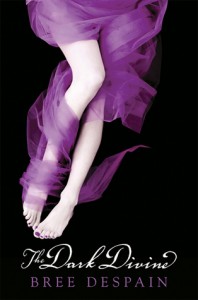
Persy -- The Dark Divine by Bree Despain

Grace Divine, daughter of the local pastor, sister of the handsomest (and nicest) guy in school, and the girl with unanswered questions. Like, what happened all those years ago when her brother Jude came home covered in blood and Daniel Kalbi completely disappeared?

By the way, Daniel used to be their next door neighbor and they were best friends growing up. Then Daniel lived with them for a few months after his dad disappeared. Then Daniel disappeared.

Grace used to ask her brother what happened. She used to bring up the topic with her family. But no one said anything, so they settled into silence. Because that's the way the Divine family is: they don't discuss the past and they don't discuss their problems, not even with each other.

Then comes the day when Daniel reappears, sitting at a desk in school with a completely new look and strange new powers. At first Grace is determined to find out what's going on, but does she really want to know?

It seems like she doesn't have any idea, because she's constantly changing her mind throughout the entire book. I swear, sometimes the girl has no curiosity. Though I have to say, she is pretty smart. After all, the smart thing to do is stay away from the dangerous teenage boy who seems to be in love with you but has dark powers and tells you to stay away (I'm looking at you, Bella Swan). So yeah, Grace follows her common sense and stays away every once in a while, but she's so bipolar that it doesn't last long.

Plus she's probably the most naive teenage girl ever. Boy does she have her stupid moments.

In the beginning (and actually, throughout the whole book), I was a little irritated with Bree Despain's vision of a Christian family. But as the story continues, Grace is made aware of the fact that her family has issues, so it's not that they're just being "good Christians," so I felt a little better after that.

The way the book is written is also a little annoying. It's mostly flashbacks, which do help to tell the story in the right order (kind of...?), but can be very cumbersome. In fact, lots of the scenes, both in the present and the past, just feel cumbersome. You could probably take out a hundred pages or so (or at least summarize them), and you'd still have the same story, just moving a little quicker.

And maybe if Grace would stop changing her frickin' mind.

One thing I really do like about The Dark Divine is the werewolves. Nowhere on the back of the book or the inside or in any summary anywhere does it mention the werewolves, but I'm going to give you a little spoiler and tell you that there are some. And they're very cool werewolves. It is not every day you read a Christian werewolf novel that somehow, inexplicably pulls it off.

Another pleasant surprise is the horror aspect. There were times when I really didn't want to put the book down because I couldn't wait to find out what happened next and I had a tingling at the back of my neck. Unfortunately, the tingling dissipated fairly quickly.

The twist ending is also very well done, but it would've been better if it had actually ended there. Ugh, how I hate happy little epilogues. They ruin the whole tone of the book (unless you're reading a happy little novel, in which case, it's perfectly fine).

So I have very mixed feelings about this book. Some of it, like the werewolves, is very good. Other parts, like Grace, make me groan. But it's surprisingly good, and I find myself recommending it despite the idiot main character. I don't expect much at all from the second book (The Lost Saint, oooh, sounds amazing), but the first one is worth a look.

--Persy

You might like this if you: have always wanted to read a Christian werewolf book; are looking for a new take on werewolves; or if you just have nothing else to read. Okay, so I might be struggling to find reasons to like this now.

Sunday, November 27, 2011

Persy -- Dragons of the Valley by Donita K. Paul

The three statues stabilizing the very thread of the world have been saved. They're in the right spot, and harmony has been restored. But is the adventure over for Tipper Schope, Grattapot-morphit Bealomon-dore, and the rest of the gang? Not hardly.

War is brewing between Chiril and a neighboring country, and they must keep the statues safe. They are sent away into hiding in one of the little-known kimen villages, with Tipper, Bealomondore, Fenworth, and Librettowit as their guardians. But they can't just sit idly by while Verrin Schope, Lady Peg, and Paladin save the day! Soon everyone is actively involved in an epic quest to save Chiril!

Let me just say, this book is so much better than the first one. It's easier to understand, had more enjoyable characters, and was set at a quicker pace. It focused more on my favorite characters, Bealomondore and Lady Peg, and also introduced a new one to add to my collection of favorites: the perky little kimen Hollee.

That said, it's still far from one of the best books out there. It might be faster paced than the first book, but it's still pretty slow.

And then there's the matter of Tipper. While she was an acceptable main character in the first book, in this one she's just plain annoying. I mean, she leads Bealomondore on for almost the entire book! Meanie pants.

Donita K. Paul also needs to develop her fight scenes a little. Dragons of the Valley does have more fighting than The Vanishing Sculptor, (it is about a war), but the battles last for only a brief paragraph always ending with "At last so and so won the battle." In this book, Bealomondore gets his own sword and soon becomes a master swordsman, and it's a shame we don't get to hear more about his amazing talent than "he whipped out his magic sword..."

But once you get all that out of the way, there are some parts I simply adored. Lady Peg really gets to shine in this one, engaging in a full conversation of twists and turns with an evil spy that leaves him thinking there's a complex system of code words and meanings.

Miss Paul also came up with a surprisingly good villain (though he could've been better, in my opinion). The Grawl, half man half beast with super human intelligence and hunting capabilities. So dangerous he could bring down Chiril, and all the dragons, singlehanded. Well, sort of.

And then there's Wulder. If you remember from the review in October, I didn't really like the God figure in the first book. But this time, he seems appropriately God-like and awe-inspiring. Bealomondore uses one of the best lines ever that is so true when he says, "As an artist, I have no doubt that someone created all you see. There is no picture without an artist."

--Persy

You might like this if you: read the first book and wished it'd been better; like Christian fantasy or adventure/fantasy; quirky fantasy like The Ratastrophe Catastrophe by David Lee Stone; or if you saved the world from unraveling but are worried about your annoying neighbor messing it all up again.

Sunday, October 30, 2011

Persy -- The Vanishing Sculptor by Donita K. Paul

Welcome to Chiril, a fantasy land of dragons, parrots, seven low races, and seven high races. It's surprisingly complicated. And then the wizard and the librarian show up and everyone's off on a quest to recover missing statues. Don't worry if you're having a hard time following, you're not the only one.

Tipper Schope has gotten used to responsibility ever since her father, the famous artist and sculptor Verrin Schope, disappeared about ten years ago. Her mother, Lady Peg (who is technically a princess, but was banished by her parents), has just about lost her mind, so maintaining the estate is left to Tipper. Luckily, she has her father's dear friend Sir Beccaroon, a grand parrot of the Indigo Forest, to help. But that doesn't make anything easy, and Tipper has to start selling her father's old pieces of artwork.

Imagine her dismay when her father miraculously returns (sort of) with Wizard Fenworth and his librarian Librettowit all the way from Amara, a distant country. When she confesses to selling Verrin Schope's statues, she discovers things are worse than she thought. Apparently, there was this block, a kind of cornerstone of the world, that fell through a portal into Verrin Schope's studio. Naturally, he carved it into three statues. But when the statues were separated, the world began to unwind, and now Verrin Schope, Fenworth, Librettowit, Sir Beccaroon, and Tipper, along with the help of a pretentious artist named Bealomondore, must recover the statues before the world, and Verrin Schope, disintegrate!

But before they do that, Fenworth and Verrin Schope decide they need a better means of travel than a rickety old carriage (for one thing, it's not fast enough, and for another, it's uncomfortable), so they go hunting for the major dragons. But people don't ride dragons in Chiril, most people never even see the big ones (the minor dragons are more like pets or servants). But befriending the dragons may be harder than they think, especially since they're in the care of a mysterious Dragonkeeper...

The biggest problem with this book is that Donita K. Paul doesn't find it necessary to explain her world at all. You're reading along and the book casually mentions the dragons and a parrot and emerlindians and tumanhofers and never tells you what's going on. Her writing style also isn't the clearest, which only adds to the confusion.

And the worst of it is, it's actually a very simple plot with rather simple, 2D characters. The writing is just so elaborate that you don't always notice. You're too busy figuring out what a tumanhofer is to care about said tumanhofer.

If you can figure it all out, then it's actually a pretty good fantasy quest novel. It's more centered on the questing and adventuring than the characters, so their flat personalities can be excused. Wizard Fenworth is easily the best character, with lizards and bugs and leaves always falling out of his beard and robes (he's a bog wizard, after all).

Another thing that rather bothered me is Wulder. This is Christian fantasy, and in this world, Wulder is the equivalent of God. Except in Chiril, no one knows about Wulder. But Fenworth and Librettowit come from Amara, where he's well known. So amidst the questing, there's lots of talk about Wulder and how Wulder will help them and it will all turn out according to Wulder's plan, whatever it may be. Which is all fine, but the way they presented Wulder made me dislike him. A Christian book that makes me dislike the God figure isn't a good thing. Donita K. Paul does get better at this, though.

If you're wondering why the picture has "Dragons of Chiril" as its title, its simply one of those stupid deals when a book is published under two names (why why why do they do that?). I believe it was first published as The Vanishing Sculptor, and that's what my copy's called, but was later rereleased as Dragons of Chiril, probably to match the other titles in the Valley of Dragons series. And I don't even know why it's called that, because it's not really about the dragons.

Speaking of the series (which is a prequel series to Miss Paul's DragonKeeper Chronicles), I'm currently reading the second book, Dragons of the Valley, and so far I'm enjoying it much more than the first book.

A few things you should know before starting The Vanishing Sculptor: there's an appendix in the back. There are seven high races and seven low races in the fantasy world, emerlindians and tumanhofers are both of the seven high races. Minor dragons, while not all over the place, are fairly common to the wealthy (though no one except the Schopes seem to have any). There are also grand parrots in the fantasy world (though we never see one besides Sir Beccaroon).

--Persy

You might like this if you like: Christian fantasy; adventure/quest fantasy; the Dragons In Our Midst series by Bryan Davis; fantasy akin to The Ratastrophe Catastrophe by David Lee Stone; or if you have suspicions that the world is unraveling but you don't know why.

Monday, October 17, 2011

Persy -- The Last Thing I Remember by Andrew Klavan

You ever wake up and find yourself strapped to a chair, covered in burns and cuts and bruises? You are, that is, not the chair. The chair's fine. Well, probably. Who knows what these dastardly villains have done to the poor thing.

Who are these dastardly villains, you suddenly ask yourself. You can't remember. You have no idea where you are. You frantically think to yourself, what's The Last Thing I Remember?

Well, The Last Thing I Remember is actually a book by Andrew Klavan, about a boy who finds himself in the exact same position. The last thing Charlie West can remember is a normal day--Yesterday? Sure, it was filled with some excitement (epic karate demonstration, finally getting Beth's phone number, arguing with Alex), but in the end, it was a normal day. Nothing to explain why he's just woken up from a night of torture.

Charlie barely escapes with his life, but now he must embark on a quest to figure out what's going on. But just as he seems to get close to safety...he finds he will never again be safe.

This book starts out strong. There's a smooth blend of flashbacks and scenes from the present, both of which keeps the reader (you!) interested. But soon the novelty of an amnesia-suffering MC wears off, and you start noticing some things.

First of all, Andrew Klavan's writing isn't exactly epic. His sentence structure is very repetitive (usually beginning with 'I'), and he tends to use short sentences for dramatic effect. He often does this. He starts the sentences with the same word. He thinks this will be cool. He is wrong.

Then, before you know it, you've reached the end of the novel, and you're left with this feeling of, "Whaaaaaa?" It's one of the most abrupt endings ever. The only warning you get is when you start noticing you're running out of pages. Klavan never quite finishes setting the story up, so the whole book feels more like a really, really long prologue.

So points to Klavan for a good idea and a good MC, but he needs to work on his actual writing style. There are three more books in the Homelanders series, and I'm at least going to read the second one in search of some kind of climax.

--Persy

You might like this if you like: The Extraordinary Adventures of Alfred Kropp by Richard Yancey, or if you like like YA thriller/suspense or action/adventure novels, or if you're worried about one day waking up with amnesia.

Tuesday, April 12, 2011

Arty -- The Fall of Lucifer by Wendy Alec

Yes, I know. Another Tuesday review. I'm sorry - the life of an American teenager is pretty busy.

Anyway. The Fall of Lucifer. Just by its title I'm sure most people can guess what it's about - the fall of the angel Lucifer, the son of the morning, from Heaven.

His tale of woe is told mostly from the perspectives of his two archangel brothers, Michael and Gabriel. In the beginning, the three are inseparable - reflecting, as they imagine, the Triune God, three brothers in one. Lucifer, the eldest, second only to Yehovah Himself; Michael, the warrior angel; and Gabriel, the little brother who also has the gift of revelation. Lucifer is, perhaps, the most devoted of Yehovah's angels.

Then, inexplicably, Yehovah creates mankind.

This drives a serious wedge between Lucifer and Yehovah - at least in Lucifer's mind. Driven mad with jealousy over mankind's seeming theft of Yehovah's affections, Lucifer... well, falls.

I really, really wanted to like this book. Angels, Three-Musketeer-style brotherhood, and the most ancient of all betrayals - how could it go wrong?

Well...

The idea is wonderful. All the way through, the plot and characters had such potential that it was almost painful to see how it was carried out. Alec desperately needs an editor... and perhaps a refresher course in how dialogue is written. And description. And character, for crying out loud. Maybe even a bit of basic Christian theology, though the unorthodox views can easily be taken for her attempts at creativity.

It hurt my inner editor when I saw the three archangels interacting - so much she could have done! But for the most part, their conversation reads like Hamlet's inept actors - sawing the air, tearing a passion to rags, to very tatters. And the old writers' rule of Show Don't Tell? Out. the. window.

I was never really sure about the setting. Most of the time, it's in Heaven - which, of course, is beautiful beyond compare. But Alec never really gives a concrete description - it's all flowery, vague ideas of rushing water and gem-covered castles and... complex laboratories. Yes, laboratories. Heaven has laboratories. And mad-scientist angels. Who knew, right? (Yes, I found it a bit disconcerting that the angels created mankind from Yehovah's DNA. God has DNA? Oh well.)

If Ms. Alec is reading this, I hope she isn't offended, because I really wanted to like this book. There were some truly striking scenes - and when it came to Lucifer's agony over his paranoia of mankind, I actually felt sorry for the guy (though whether it's appropriate to feel sorry for Satan, I'll leave to more knowledgeable minds than mine).

So, if you're an angel enthusiastic or if you like a light Christian fic that doesn't take much to follow, I'd say pick this one up. Otherwise, find something more engaging (and well-written) to read. (My alternative would be the Dragons in our Midst series by Bryan Davis or The Prophecy by Dawn Miller.)

Saturday, January 15, 2011

Arty -- Lucy Doesn't Wear Pink by Nancy Rue

It's my firm belief that any serious reader must, at some point, abandon all the well-meaning but tediously thoughtful, serious Eragons and Hunger Games that so permeate the YA market. Thinking is good for you, of course, but sometimes you just have to stop contemplating the meaning of life and be a kid again. Or, still. Or whatever. Hence, Lucy Doesn't Wear Pink.

Lucy Rooney, obviously, does not like pink. She doesn't like anything girly. All she wants to do is play soccer and take care/be taken care of by her blind father. (Her mother was killed when she was seven in the same explosion that blinded Dad.) Oh, and make lists of her problems/issues/whatevers in the book she found that was her mother's.

Then... well, pretty much her life falls apart. Her pseudo-evil Aunt Karen decides that blind Dad isn't fit to raise Lucy. Lucy's class gets a new teacher who turns school - and soccer at recess - upside down. And Lucy's best friend, J.J., starts having even more problems at home than ever.

I didn't hold out much hope for this book. After all, a young girl's Christian novel - how could it be any good? Sadly, those don't have the best reputations. But Nancy Rue managed to surprise me. I couldn't wait to finish the book, to find out how everything fell into place. Because, honestly, I couldn't see how.

I think the best way to sum up the pleasant surprise of Lucy is how much restrain Rue uses, especially in regards to her characters. Arguably none of them were pure black and white. For example, I hated Lucy's new teacher, Mr. Augustalientes, at first. He made them call him Mr. Auggy, for one - that's just wrong. Naturally, he grows more personable, more understandable. But I never quite liked him. It was a curious reaction to a character and I have mountains of respect for Nancy Rue just for that one reaction. She doesn't make you love every single 'good' character and hate every single 'bad' character. It was a balance of grays.

I just have to mention the sort-of villain, Aunt Karen, while I'm on the subject of grays. I loathed her. She had pride and control issues oozing out of every pore. But every time I hated her most, she would do something strange - good or bad, it didn't matter, but it gave her a little bit of ambiguity. I honestly couldn't figure her out, and I felt bad for hating her. Props to Rue for the most confusing antagonist since Ariel from Eyes Like Stars.

The biggest flaw in the book is, of course, the Christian theme. It's devilishly hard to distribute that theme in any book, and I don't think I've found a book that accomplishes it perfectly, unless you count allegory (Narnia, anyone?). Lucy doesn't break the record. But it does a much better job of it than most novels even dream about, and that's another thing I applaud Rue for.

I'm sure Lucy isn't a book for everyone, especially not with the Christian subplot. But if you like it/don't mind it, then I'd say go for it. (Also try out her Sophie series - also good and very original in the same vein.)

Sunday, December 12, 2010

Arty -- Comes A Horseman by Robert Liparulo

A possible serial killer who decapitates his victims. An Italian politician who desperately wants - needs - more power. And... Antichrist.

How in the world are these all connected? You'll just have to read it and see, because I honestly cannot sum it up.

The main characters - Brady Moore and Alicia Wagner, two FBI agents who are trying to make sense of the grisly murders of five people. The victims are completely different; there are no obvious similarities to give the serial killer theory credit. But, of course, Brady and Alicia keep trying to uncover the mystery... and find themselves in the middle of Vatican secrets and prophecies thousands of years old.

Sound complicated yet? There's way more.

I have to admit, I'm a huge fan of Liparulo just from reading his Dreamhouse Kings series (a YA six-book series that I simply cannot plug enough - it's that good). So I had high hopes for him, despite this being a Christian adult novel. I've said in two previous reviews that I don't usually hold much hope for those. Even now, I'm not sure if I like it just because I have a special place for Liparulo in my heart and my library, or if it was really good. But I'm pretty sure it was the latter.

Crime procedurals are standard Christian fic material; add in some Satanic cults and spiritual warfare as well as physical, and that still accounts for a lot of bad-review fodder. And no, Comes A Horseman isn't the pinnacle of originality. But it's just good. Liparulo's style is clear and interesting (though maybe not as punchy as Ted Dekker). The pace is usually good, keeping it along at a quick but not rushed pace.

The characters are good, too. You have Brady, a guy still neck-deep in grief for his dead wife, hanging on only for his nine-year-old son Zach (who, by the way, is adorable). Alicia is a gung-ho gal who tends to remind one of the Energizer Bunny. Of course, you have the hints of romance between the two. But it's realistic, taking a back seat to the action; or, rather, it enhances the action by giving the two characters someone else to fight for and not just fawn over.

Another note on characters - the author is not afraid to beat them up. I was practically groaning for Brady by the final ten chapters or so of the book.

I was starting to get worried by the last chapter; this novel just keep going and going, the action showing no sign of slowing down. And yes, the end was abrupt, and more than a little too easy. It wasn't quite the apocalypse I was hoping it to be. That might have been the point - I'm not sure.

Perhaps it won't win any awards, but Comes A Horseman is definitely a keeper for fans of Christian fic. And, even if you're 'too old' for YA, I strongly urge you to check out the Dreamhouse Kings series, beginning with House of Dark Shadows. Robert Liparulo, obviously, is not an author to be missed.

Saturday, August 14, 2010

Arty -- Love Me If You Must by Nicole Young


If you read my earlier post on Kiss, you know I don't like Christian adult authors, except for some exceptions. Nicole Young is now an exception.

"A run-down Victorian to renovate, a past to leave behind--who has time for romance...or murder?" Patricia "Tish" Amble has just moved to the small town of Rawlings, and she thinks she's finally got her life together. The police aren't on her, she's nicely isolated in her new fixer-upper - everything seems to be falling into place.

Then she meets her two neighbors - handsome Brit David, and rugged policeman Brad. And both of them want more than a friendly neighborship. Did I mention that Brad's a policeman? So Tish stays away from him in favor of the more elegant David.

But there's more to the old Victorian house than Tish knows. Faces appear, and voices come out of nowhere. The high point of the hijinks is the body she thinks she sees in the basement cistern. But when she gets the police to look... there's nothing there. They tell her it was a trick of the light. Tish isn't so sure.

To say any more would give away a lot of the surprises in Love Me. Suffice it to say that there are murders, scandals, doppelgangers, and a lot of lovely confrontations with the said love triangle.

Love Me is written in first-person, which is a definite plus. Tish's sometimes wry, sometimes manic, sometimes naive voice is consistent (and very, very amusing at times). The characters are all more than they seem - I can't remember more than one or two people who didn't have ulterior motives, and the ones that didn't were very minor.

As a mystery, the story falls a little flat. There are no brilliant revelations, no stunning red herrings, no shocking betrayals. But, just as a suspenseful, interesting novel, it shines - at least among adult novels. I especially enjoyed the ending - to say anything except that it was utterly different would spoil a surprise.

There are two more books in the Patricia Amble Mysteries series, with equally interesting titles: Kill Me If You Can and Kiss Me If You Dare. I'm waiting to get them from the library, but I've heard that Kill Me ends on a cliffhanger. Definitely a series to watch.