Monday, June 13, 2011

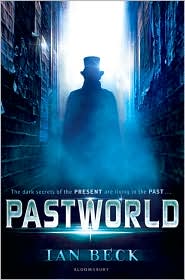
Persy -- Pastworld by Ian Beck


The year is 2048. The place is London. But unlike the rest of the world, London has not progressed. London, better known as Pastworld, was long ago converted into a theme park where the key word is "authentic". The entire city of London was reverted back to the Victorian era, and is now a place where people from all over the world can come for a vacation of thrills and chills.

Most of the natives of Pastworld know they aren't actually in Victorian London. There are the legal natives who live there all the time. Then there are the illicit beggars, known as the Ragged Men, who aren't supposed to be around but are anyway. And then there's Eve. Eve is a native, supposedly legal, but she doesn't know that she lives in a theme park. She only has a few years worth of memories, and her guardian, the near-blind Jack, hasn't told her much. But as she learns more, she finds that someone is after her, and so in order to protect Jack, she runs away and joins a circus where she discovers her strange ability to dance on a tightrope.

Caleb Brown is a Gawker, a visitor come to enjoy a few weeks in Pastworld. His father is Lucius Brown, one of the imagineers who first created Pastworld. Caleb, though he doesn't want to show it, is thrilled to finally visit the city his father helped make, but the 'vacation' turns into a nightmare when a blind man is killed in front of him and his father is kidnapped by ragged men. Caleb disappears into Pastworld, struggling not only with his conscience, but the basic neccessity of staying alive.

The Fantom is a cold blooded killer who's been missing for years. Gawkers, and even some of the natives, don't believe he really exists, and just think he's a story created to add a hint of danger to the theme park, but he is more than real. And he's returned to Pastworld in search of Eve.

In one sentence, Pastworld is: a very unique book that is both dystopian and steampunk about a killer modeled after Jack the Ripper, a young girl with strange powers, and a few other dudes. And the cover is beautiful. Thank the Lord the book lives up to its cover and description.

So yes, this book actually was surprisingly good. I figured out the mystery of Eve and the Fantom very early on, and I don't know if that's because of a slightly similar plot I've seen or if it's just a transparent plot. But that certainly didn't make me stop reading. It has a great atmosphere and none of the characters are irritating enough to make the book unenjoyable. The basic problem is that it feels like it should be more complicated than it is. It feels like there should be violent plot twists, darker mysteries, and more intensity. Perhaps if this had been geared towards a slightly older audience, it would've been so.

Really, the only thing that bugged me was the punctuation. There were not nearly enough commas in the book, and there were a few random question marks where periods should've been. I was hoping this was just because it was Ian Beck's first novel, but turns out it isn't, so I'm not sure what his problem is. And the ending is a bit...anticlimactic. You know me and endings.

To conclude, Pastworld is a unique novel (set in the future but at the same time set in Victorian London) that, while it isn't going to win any rewards in my log, is definitely worth a look (at least gaze at the cover for a little while).

--Persy

Saturday, June 4, 2011

Arty - The Seeing Stone by Kevin Crossley-Holland


I've seen this book in a hundred different bookstores and been mesmerized every time by its cover. Maybe I have a thing for old-fashioned covers, but... isn't it beautiful? There's just something magical about it.

And then there's the old adage, Don't judge a book by its cover.

Arthur de Caldicot is the son of John de Caldicot, lord of a manor near the Welsh border in 12th century England. He's a normal thirteen-year-old, the second-born son, hoping to become a squire soon. His older brother, Serle, is a bully; his friend, Merlin, is as mysterious as old men come (not to mention he can jump 47 feet in a single bound).

Then Merlin gives Arthur a strange stone - an obsidian - that shows him of another Arthur, one from centuries past... the son of King Uther. And Arthur starts to realize that perhaps his humdrum existence isn't all there is to him.

As is obvious, this is a retelling, of sorts, of the King Arthur story. Well, maybe not retelling, as all the classical story has already passed and is accepted as fact; a continuation. And as interesting as it sounds... Crossley-Holland really let his story fall.

Basically - nothing happens. There are 100 chapters in this book, most pleasantly short, but they don't really do anything to advance the plot. It's Arthur, living his life as it happens, and occasionally seeing flashbacks of his past self - the Arthur - in his obsidian. I've heard critical reviews saying that the book is 'melodious,' 'thoughtful,' 'musical;' these, apparently, are synonyms for 'boring,' 'uninspired,' 'lifeless.'

The prose was good, even 'musical' at times. The beginning sentence: "Tumber Hill! It's my clamber-and-tumble-and-beech-and-bramble hill! Sometimes, when I'm standing on the top, I fill my lungs with air and I shout. I shout." It's lilting, compelling, even hypnotizing sometimes, like Old English ballads.

But prose can't save a sagging plotline.

Arthur was a likable enough kid, as was his little sister Sian. And Merlin - well, I haven't met an author yet who can totally ruin Merlin, and Crossley-Holland is no exception. It's not like any reader with half a brain can't guess that 'the hooded man' that Arthur sees in his obsidian is Merlin, but it's still great to see him in his quintessential Totally Awesome Old Wizard role. That never gets old (no pun intended).

The story did pick up a little tiny bit at the end, and if the library has the sequel, I might pick it up... on a slow day. And this is because I'm a King Arthur fan. If you're not a King Arthur fan, then this is definitely not the book for you (and it probably won't be even if you are).

Someone looking for something better would do good to look up the Pendragon Cycle, by Stephen R. Lawhead. Obviously based on Arthurian legend, it goes all the way from Taliesin (an old Celtic bard) to the search for the Holy Grail. I've only read the first book, Taliesin, which was very good, but I've never known Lawhead to disappoint as his series go along.

Another alternative to the Arthur Trilogy would be the Lost Years of Merlin, by T.A. Barron. These, obviously, are about Merlin, not Arthur, and, while they can get extremely cliché and/or cheesy, they're still quite entertaining.

Saturday, May 28, 2011

Persy -- Dragon Slippers by Jessica Day George


Creel isn't the most fortunate of peasants. She lives with her aunt, and, in an effort to marry Creel off and get more money, her aunt sends her into a dragon cave and runs off to tell the local knight that a beautiful young maid has been captured by a dragon. Creel isn't especially beautiful, but her aunt has her hopes.

Since Creel doesn't want to be rescued by or marry the local knight, she reasons with the dragon and discovers that not all dragons have heaps of treasure after all. In face, most dragons don't like gold. Instead, they each have one thing they love. This particular dragon likes shoes. After a bit of bargaining, Creel manages to escape along with a new pair of shoes from the dragon's collection. They're like no slippers Creel has ever had before, but they're incredibly comfortable and fit her perfectly.

Instead of going back to her little village, Creel heads for the King's city in the hopes of becoming a professional embroiderer. But before she's even halfway there, she is set upon by a band of thieves! Not to worry, though, for a dragon named Shardas swoops out of the sky and carries her off to safety -- that or for his next meal.

Shardas collects glass windows, and Creel is immediately enchanted when she enters the dragon's lair. The two quickly become friends, and Creel stays with Shardas for several weeks while she expands her sewing examples. Neither friend wants to leave the other, but they know it's for the best.

But almost as soon as Creel sets foot in the King's city, she offends the foreign princess who has arrived to marry the prince. And when she finally escapes that ordeal and settles down in a sewing shop, she finds her troubles are not over. Not only is city life not all that she dreamed, but the snobby foreign princess is not gone forever. As Creel struggles to keep up her sewing, she uncovers a dangerous plot that not only puts herself at risk, but also her dragon friends!

This is a wonderful book. Creel is a great main character (and you know how rare those are), and the supporting characters really are just as great. Jessica Day George actually did an admirable job of steering away from some character clichés, though she knows which ones are classics for a reason. And then the plot was great as well! It goes from simply country girl trying to make her way in the city to a full-blown dragon war! *happy sigh* And it has a great ending as well. And you know how much I adore fabulous endings.

In case you hadn't noticed, I have a soft spot for both fairy tales and dragons, but even if you don't, I'm sure you'd like this book as well. I'd give it to fantasy loving tweens or teens, and fans of Patricia C. Wrede's Dealing With Dragons/Enchanted Forest Chronicles are also sure to love this series. There are two more books in the Dragon Slippers series, Dragon Flight and Dragon Spear that I'm just itching to get my hands on. And if you still want more George or if you're a fan of fairy tale retellings, she's got an ongoing series Princesses Of The Midnight Ball which currently contains two books.

Looking at Dragon Slippers, you probably wouldn't expect much, but it's a great fantasy story about dragons and sewing that is a must-read.

--Persy

Sunday, May 22, 2011

Arty -- Dying To Meet You by Kate and Sarah Klise

Ignatius B. Grumply (or I.B. Grumply) is a famous children's author who hates children. Digest that.

Now. Grumply needs to finish his new book, one in a long series of ghost stories for kids. But he's not inspired. So he rents a house in Ghastly, Illinois to get away from his publisher and recharge his batteries, so to speak.

The house he gets? The charming one portrayed in the picture to the left. It's the home of the Hopes - Les and Diane Hope, to be exact, and their son, Seymour. The Hope parents are famous paranormal investigators and have left Seymor at their house alone.

For Grumply to take care of. Oh - and did I mention the ghost of the unpublished author still living in the house, who happens to be friends with Seymour?

What follows is what might be called a 'graphic epistolary novel,' and a delightful one it is, too. I mean, look at the cover - how can a book with that lovely cover ever be bad? (I know, I know, don't judge a book by its cover... but still.) I just wish I could have found a bigger picture so you could really sink your visual teeth into it.

Enough about the cover. If you don't get out much, an epistolary novel is one that is told completely through letters and other sorts of communication (emails, instant messaging, business letters, etc.). A graphic novel is one with pictures. So we have a book about a grumpy old author, a lonely boy, and an unpublished ghost (Olive C. Spence), told through business communiqués, personal letters, and even ongoing conversations between Grumply and Olive on Grumply's word processor, all embellished with Seymour's pictures.

It's as adorable as it sounds. It's easily read - I finished it in about an hour - but it's not just another dumb kid's book. It's funny, it's clever (even if the premise isn't too original), and the interactions between Grumply, Olive, and Seymour are amazing - especially Olive and Grumply. I love bossy, take-charge ghosts, and Olive really gives it to old Grumply. I laughed out loud more than a few times.

Another highlight? The names. Every single name had a joke in it. I.B. Grumply. Olive C. Spence. Paige Turner (the publisher). M. Balm (a resident of Ghastly). Anita Sale (the real estate agent). It's hilarious! Maybe I was just in a good mood, but everything seemed so witty.

Maybe the business interactions aren't very businesslike - what do you want in a kid's book, the Wall Street Journal? Maybe the ending is a little too easy - it still makes you smile. Maybe it's not a perfect book - can you show me one? As far as I'm concerned, Dying To Meet You - the first book of the series 43 Old Cemetery Road - is a must-read.